Chess It looks complicated with 32 pieces and 64 squares, but when separated into parts, each piece only has a very short move rule. Children do not need to learn it all in one session. The easiest way is to learn one piece at a time, play a small game with that piece, and then put it all together into a full game.
For 5–6 year olds, 10–15 minutes per session is enough. Children 8–11 years old usually learn all the moves in a few sessions, but they should still play games with few pieces to get used to the game before playing the real game.
What's in a chess board? How to set the chessboard correctly?
The chessboard has 64 squares, alternating light and dark colors, arranged in 8 rows and 8 columns. Each person sits on one side, one side holds a white piece, the other side holds a black piece.
The first thing that is often confused is the direction of the chessboard. The rules are simple: the box in the lower right corner of each player must be a light colored box. Tips for children: "white box on the right". Before each game, the child checks himself by placing his right hand on the corner of the chess board to see if it is a lighted square.
Chess square coordinates: read like finding a seat in a movie theater
Columns are called by letters a, b, c, d, e, f, g, h from left to right (seen from the white side). Rows are numbered 1 to 8, row 1 is the row closest to the white piece. Each box has a name consisting of column letters and row numbers, like "row E, seat number 4" in a movie theater: box e4 is column e, row 4.
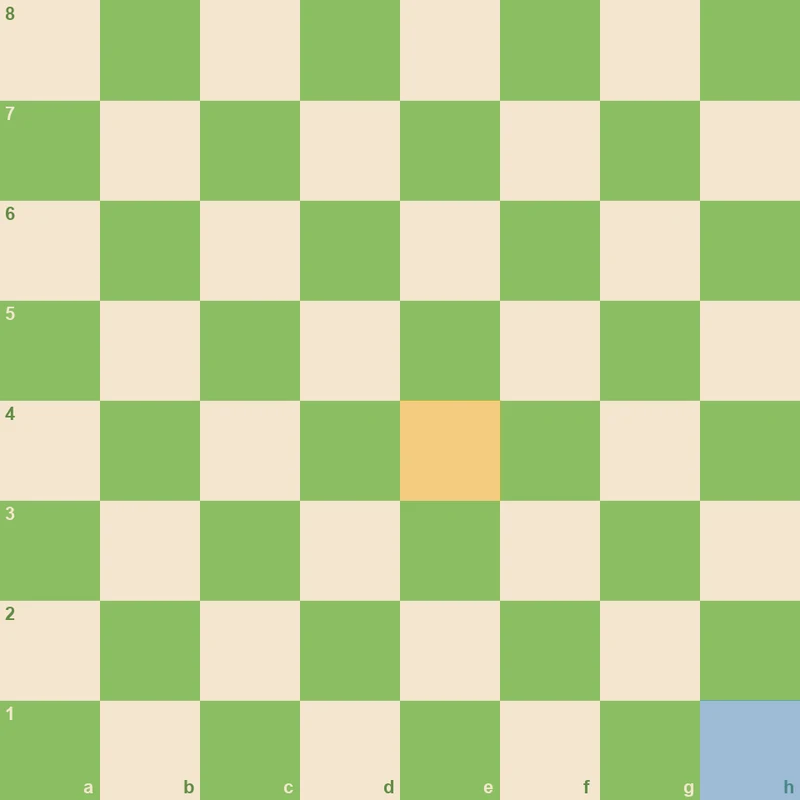
Small game "Find the cell": Parents read a cell name, child Place a coin or bean on that exact box. Change roles: baby reads, parent searches. Older children can compete to see who can find 10 correct boxes faster. This is the foundation for your child to read chess books and exercises in the future.
How to initially arrange chess pieces?
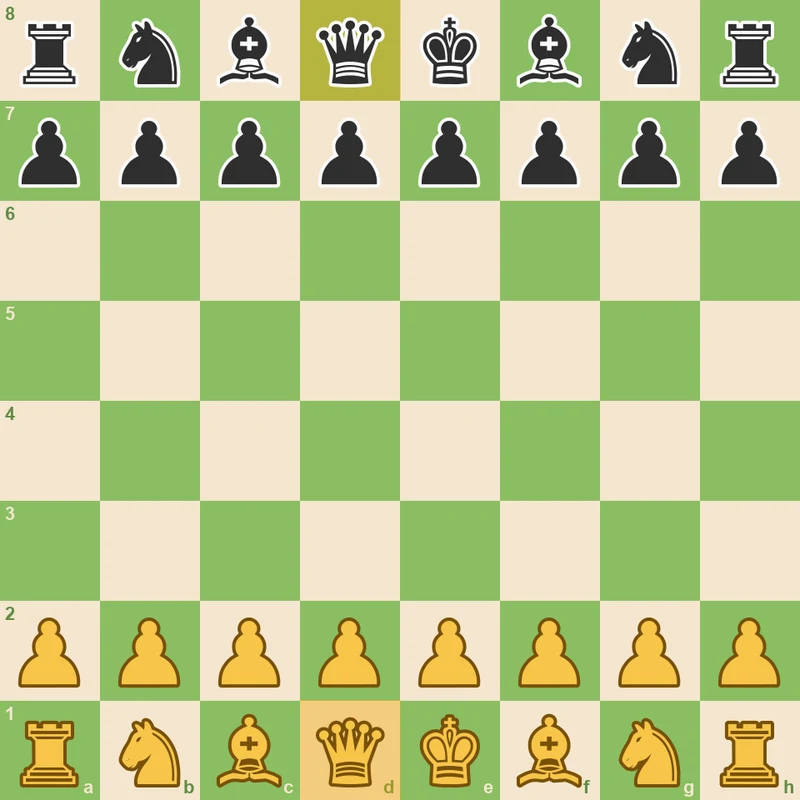
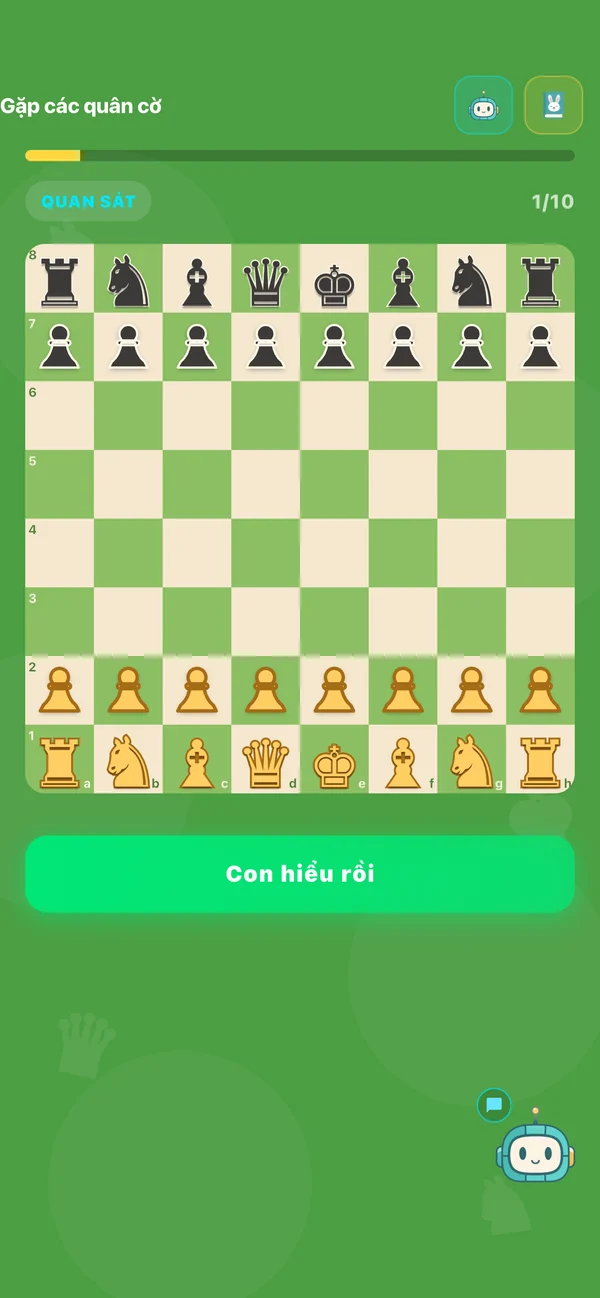
Each side has 16 pieces: 1 King, 1 Queen, 2 Rook, 2 Bishop, 2 Knight and 8 Pawn. White pieces are placed in rows 1 and 2, black pieces are placed in rows 7 and 8.
- Back row (row 1 with white pieces), from left to right: Rook, Knight, Bishop, Queen, King, Bishop, Knight, Rook.
- Front row (2nd row with white pieces): 8 Pawn pieces.
- Two Rooks stand at the 4 corners, Knight stands next to Rook, Bishop stands next to Knight.
The most common confusion is which box Queen and King stand in. Tip: "Queen stands in the same color". White Queen stands on light square d1, black Queen stands on dark square d8. King stands right next to Queen, in column e. When finished, two Queen look straight at each other on column d, two King look straight at each other on column e.
Small game "Bringing the pieces home": parents put all the pieces out on the board, timer so that the child can arrange them in the correct starting position. Next time try to beat your own record.
How to move chess pieces: piece by piece
There are two general rules for all pieces. First, the piece eats the opponent's piece by entering the square that the piece is standing on, the captured piece is lifted off the table. Second, no piece can enter a square with a piece of the same color. Except for Knight, no piece can jump over another piece.
How does Rook go?
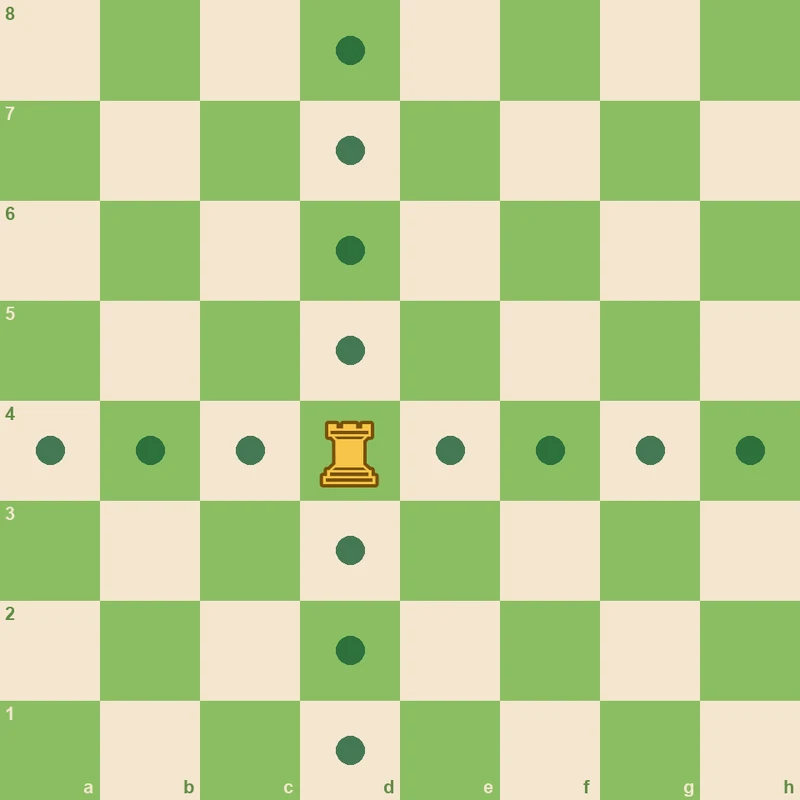
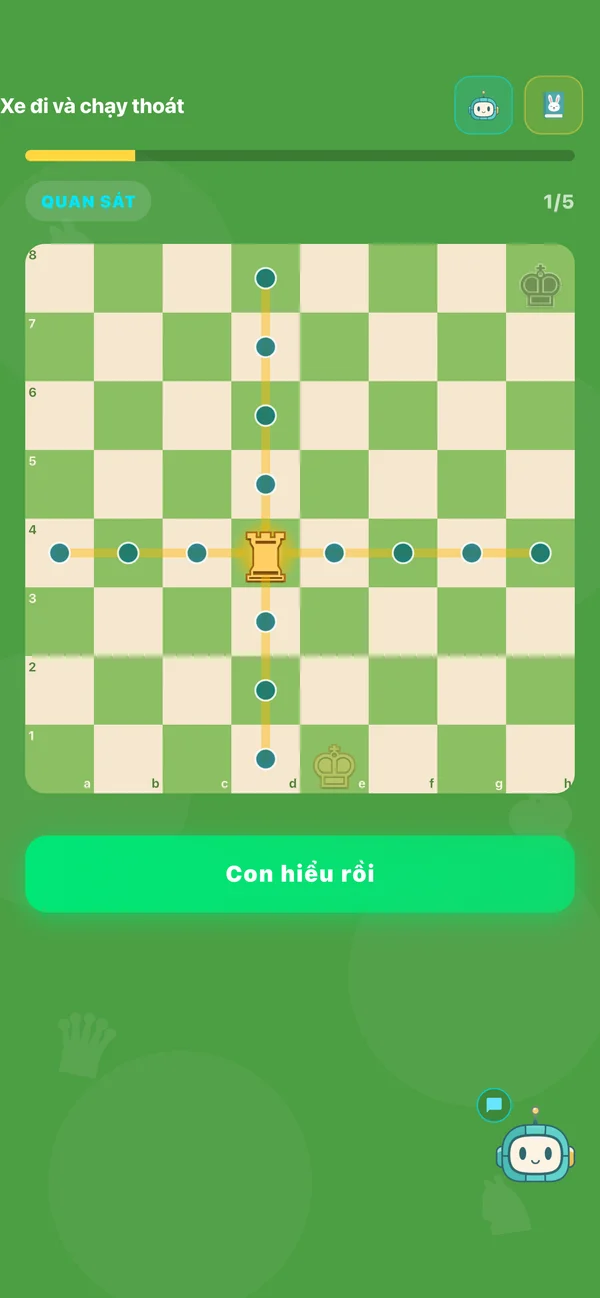
Rook goes straight in a horizontal row or vertical column, moving as many squares as possible, as long as The road is not blocked. Rook standing on d4 on an empty table can move up to 14 spaces.
Tip: Rook is like a car running on a straight road, it cannot turn diagonally.
Game "Only Rook vs Pawn": child holds 1 White Rook, parent holds 3–4 black Pawn in row 7. Black Pawn tries to go down to row 1, white Rook tries to eat all Pawn. This game teaches children to see far in straight lines. When the child wins easily, give the parents 1–2 more Pawn.
Bishop how to go?
Bishop go cross, any number of cells is fine, as long as the path is not blocked. Bishop on d4 on an empty table can move up to 13 spaces.
An interesting thing that children often discover: Bishop standing on the light square will only move on the light square for the whole game, Bishop standing on the dark square will always be on the dark square. So each side has one Bishop light square and one Bishop dark square.
Tip: Bishop "never change shirt color".
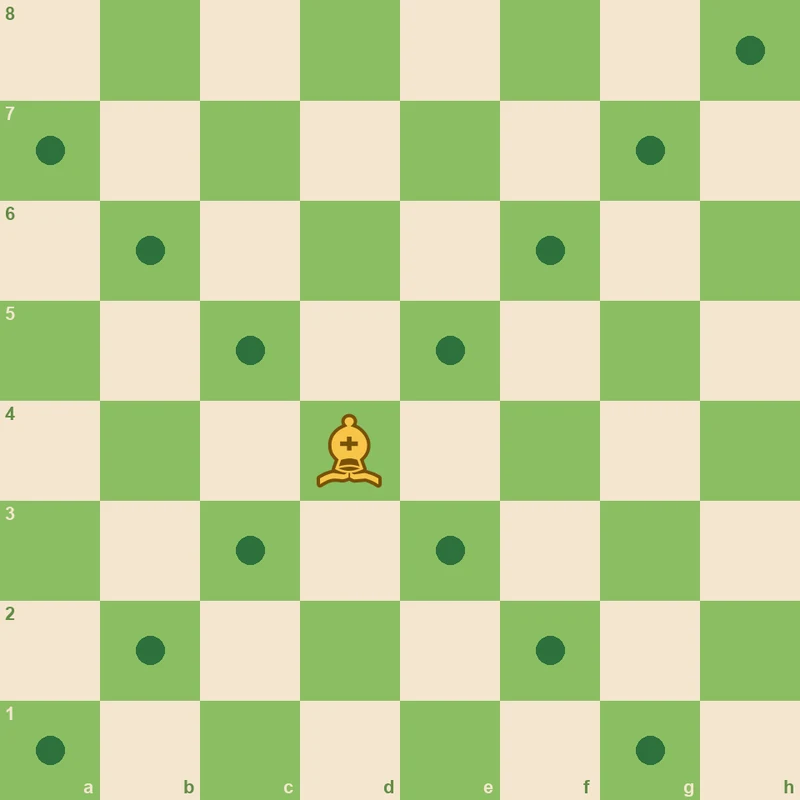
Queen how to go?
Queen goes like Rook plus Bishop: straight or diagonal, according to all 8 directions, as many cells as possible. Queen on d4 on an empty board can move up to 27 squares, so Queen is the strongest piece.
Tip: "Queen = Rook + Bishop". Because he is strong, he also needs to learn to hold Queen carefully, do not put Queen in a box where the opponent's army can capture it.
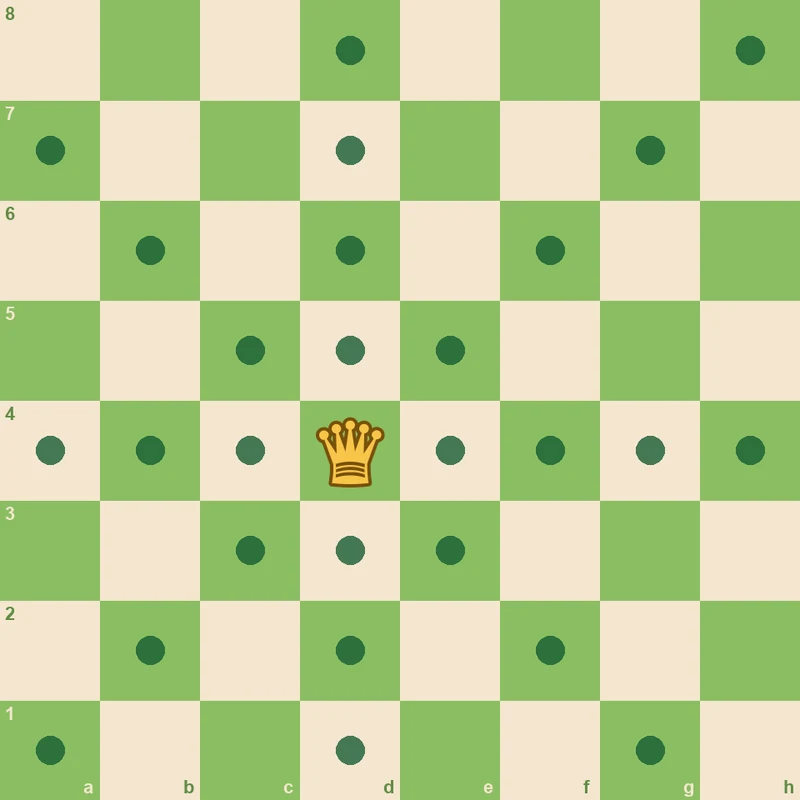
How does King go?
King also goes in 8 directions but only 1 cell per move. King on e4 has a maximum of 8 spaces to move. The most important rule of King: do not enter a square that is being attacked by enemy troops. Therefore, two King never stand close to each other.
Tip to remember: King is an old king, walks slowly step by step and is very afraid of danger.
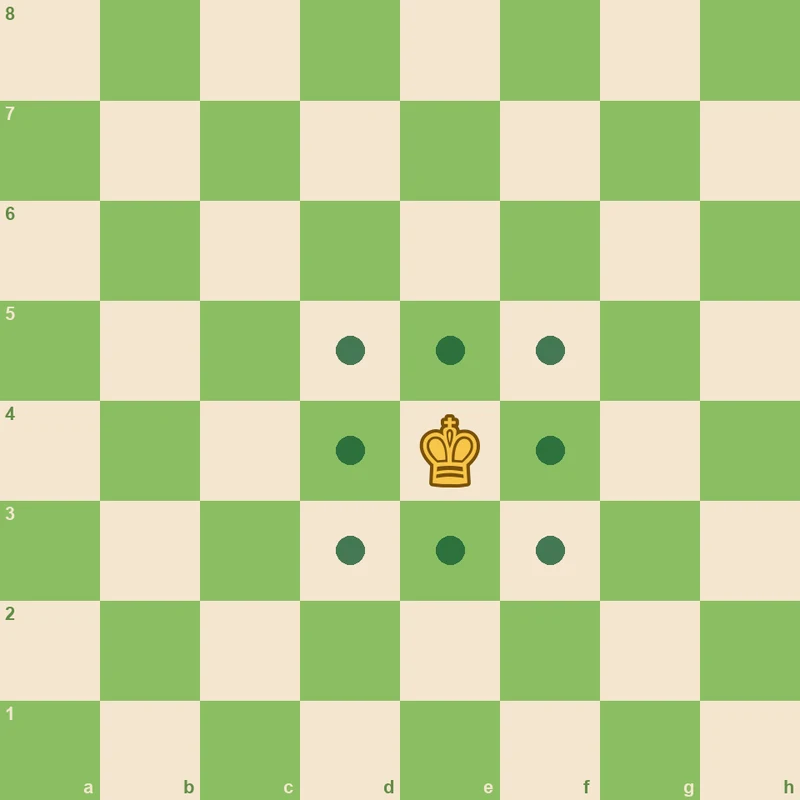
Knight how to move?
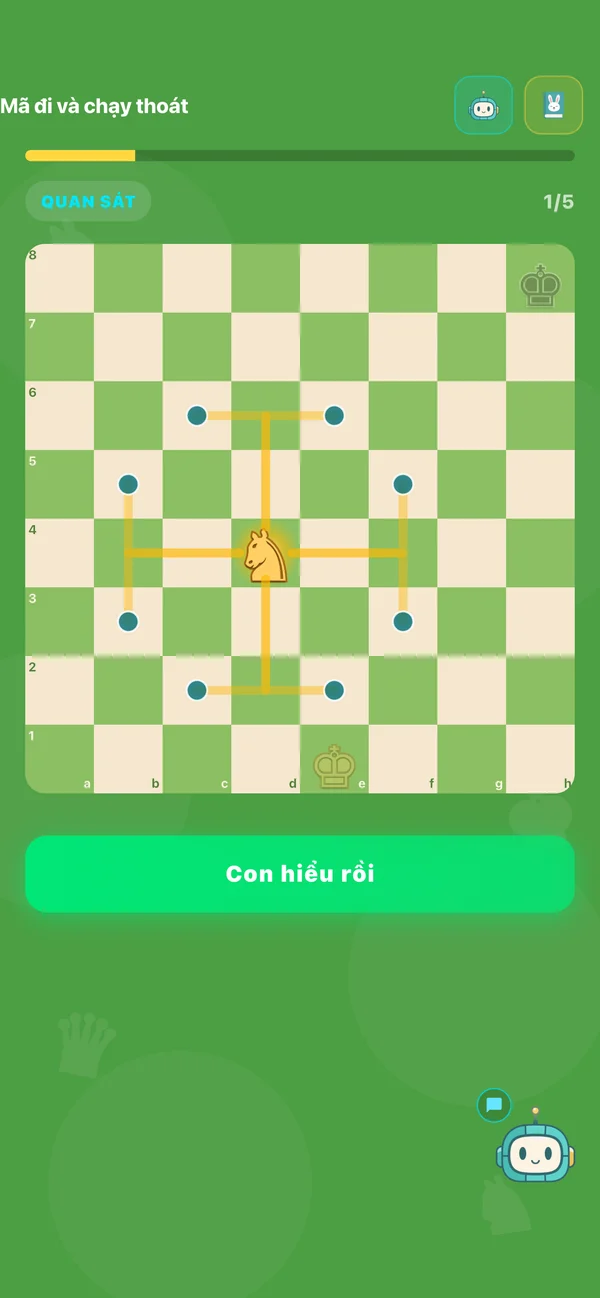
Knight is the small piece that I find the most difficult. Knight goes in a L shape: 2 cells in a row or column, then turn 1 more cell to the side. Knight is the only piece that can jump over other pieces, whether it's your own piece or the opponent's piece.
Another way of looking at it makes it easier for children: Knight always jumps to another tile. color with the cell standing. Knight is on the light square, the next move is on the dark square, and vice versa.
Tip to remember: "Two straight steps, one turn, jump over everyone's head."
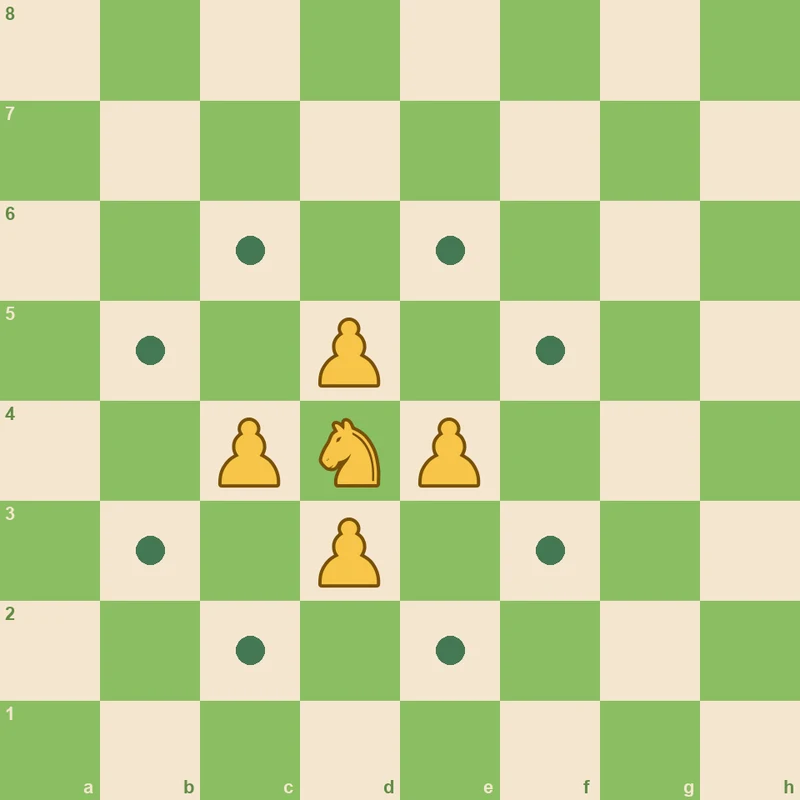
Game "Knight looking for candy": place a Knight in the corner and a candy (or coin) in another space. The child must bring Knight to eat candy with the least amount of water. Start with candy 1 move away, then gradually increase to 2 or 3 moves.
Pawn how to go?
Pawn has its own rules, so parents teach this part slowly:
- Pawn just go straight forward 1 space, never backward or sideways.
- On first move of each Pawn, Pawn is selected to go 1 or 2 squares.
- Pawn cross attack: only capture the piece standing on the diagonal square right in front. Pawn cannot capture the piece standing straight in front of it, so if there is a piece blocking the front, Pawn stands still.
- Pawn goes to the last row and will be promotion into another piece. This rule and the rule "en passant" are explained in the article rules checkmate, castling, promotion.
Tips to remember: "Pawn goes straight, eats diagonally, does not turn head".
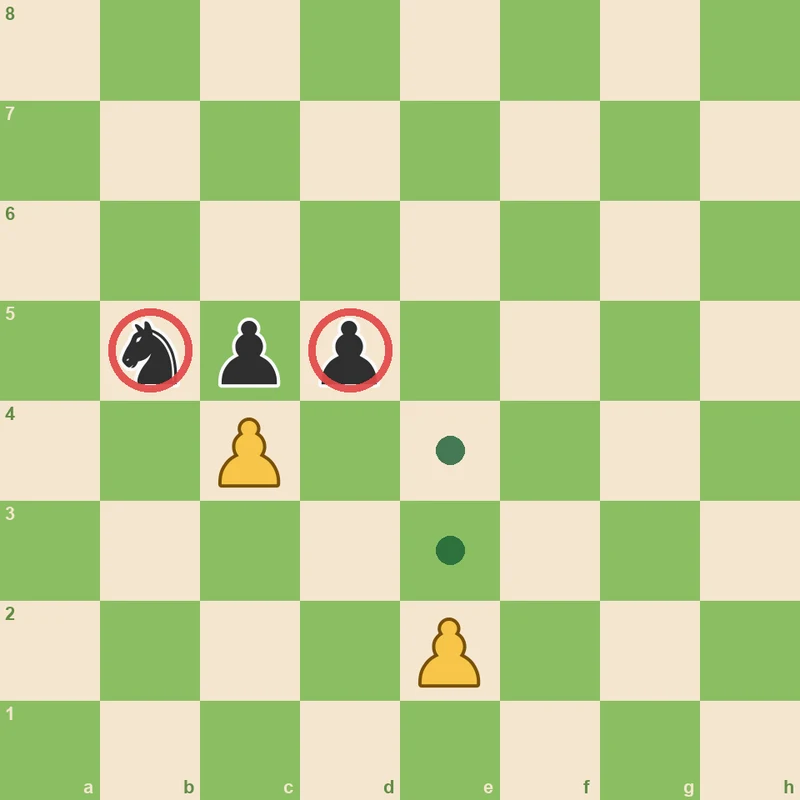
Game "Only Pawn fights Pawn": each side only has 8 Pawn in the starting position. Whoever gets a Pawn to the opponent's back row first wins (or wins when the opponent has no moves left). This game is great for 5-7 year olds because the rules are few but you still have to think: will you win if you move up?
Value of chess pieces: which piece is more "expensive"?
To help children know if exchanging pieces will make a profit or loss, chess players often use the familiar scale:
- Pawn: 1 point
- Knight: 3 points
- Bishop: 3 points
- Rook: 5 points
- Queen: 9 points
- King: does not count, because losing King means losing the whole game
This is an estimate scale, not a rule. For your baby, just remember: don't exchange the Queen for a Knight, don't let the Rook be eaten by the Pawn. Children 8–11 years old can add up the points of both sides' pieces after each game to see who is better.
What is the goal of the chess game?
The white piece always goes first, then the two sides each take turns making a move. The goal is not to capture the most pieces, but checkmate King the opponent: attack King so that King has no way to escape. The chess game can also end in a draw, for example when one side has no more legal moves and King is not in check.
For beginners, parents can explain: "Taking a piece is to weaken the opponent, and winning is when you capture King and can't run anywhere else." Details about check, how to escape check, checkmate and draw are in the lesson Chess rules for children: check, checkmate, castling, promotion.
What is the reasonable order of teaching for children?
5–6 year olds may need to repeat each session 2–3 times. Older children can combine 2 sessions into one. If parents want to have a regular practice schedule after their child learns to play pieces, see the lesson practice chess every day and 6-stage self-study roadmap. The small games above are also a very natural way to practice thinking.
Learn how to move troops in the Karotto app
Note for transparency: Karotto is an application made by this blogging team. The section below describes exactly what the app has for parents to consider.
The Chess course in Karotto starts exactly in the order above: the lesson "Meet the chess pieces", "Bring the pieces home", then each piece with cards like "Rook go and escape", "Knight go and escape". The child touches the piece, the app shows dots on the squares that the piece can move, then the child touches the square he wants to move. Each lesson has a "Sample Learning" section to preview, then a "Practice" section for your child to go on their own.
Instructions and comments can be read out loud, including Vietnamese, so children who are not fluent in reading can still learn on their own. When the child makes a wrong move, the chess board not only shows "wrong" but replays the consequences of that move so the child can see why he shouldn't make a move.
Frequently asked questions
Which chess pieces should children learn first?
Should start with Rook because the straight path is easiest to see, then Bishop, Queen, King. Knight and Pawn have their own rules so they are left for last. Only one new piece is needed each session.
Which side goes first in chess?
The side holding the white piece always makes the first move, then the two sides each take turns making a move. Do not skip turns.
Can King take a piece?
Yes. King captures an opponent's piece on an adjacent square, as long as after capturing, that square is not attacked by another opponent's piece. King should never move into a square that is being attacked.
Can a 5-year-old learn how to move chess pieces?
Many 5-year-olds can learn if each session is short 10 to 15 minutes, learns one piece at a time, and plays a small game before playing a full game. Children are not yet proficient in reading, so they need an adult or an application with a voice to guide them. See more articles At what age should children learn chess.
Summary
Place the chess board with "white squares on the right", arrange "Queen on squares of the same color", then learn one piece each session with a small game. When the child gets all 6 pieces right without being reminded, it's time to move on to the check rule and checkmate.
Let your child practice playing pieces with Thỏ Bông
Karotto has a Chess course with 283 lessons from getting used to the chessboard to the end game, no advertising. Every day your child learns a reasonable amount of lessons for free; If you want unlimited learning, the Premium package is a one-time purchase for lifetime use, not a monthly subscription.
Download on App Store → Download on Google Play →